Mini Christmas Retreat

“God With Us” Christmas Retreat Invites Parishioners to Make Room for Christ
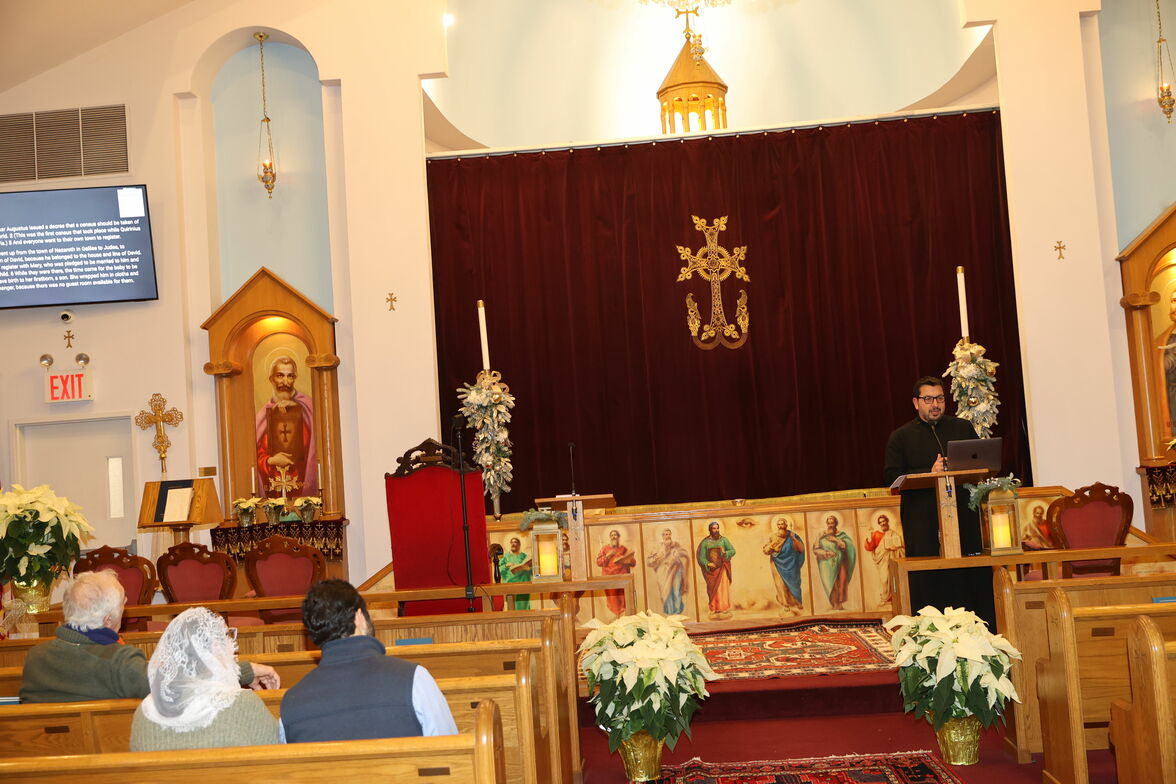
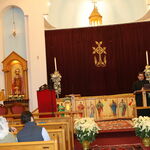
On a peaceful December evening, parishioners of St. Sarkis Armenian Apostolic Church gathered in the sanctuary for a special Christmas retreat designed as a “mini-retreat” rather than a lecture, providing an opportunity to slow down, pray, and enter more deeply into the mystery of Christ’s birth.
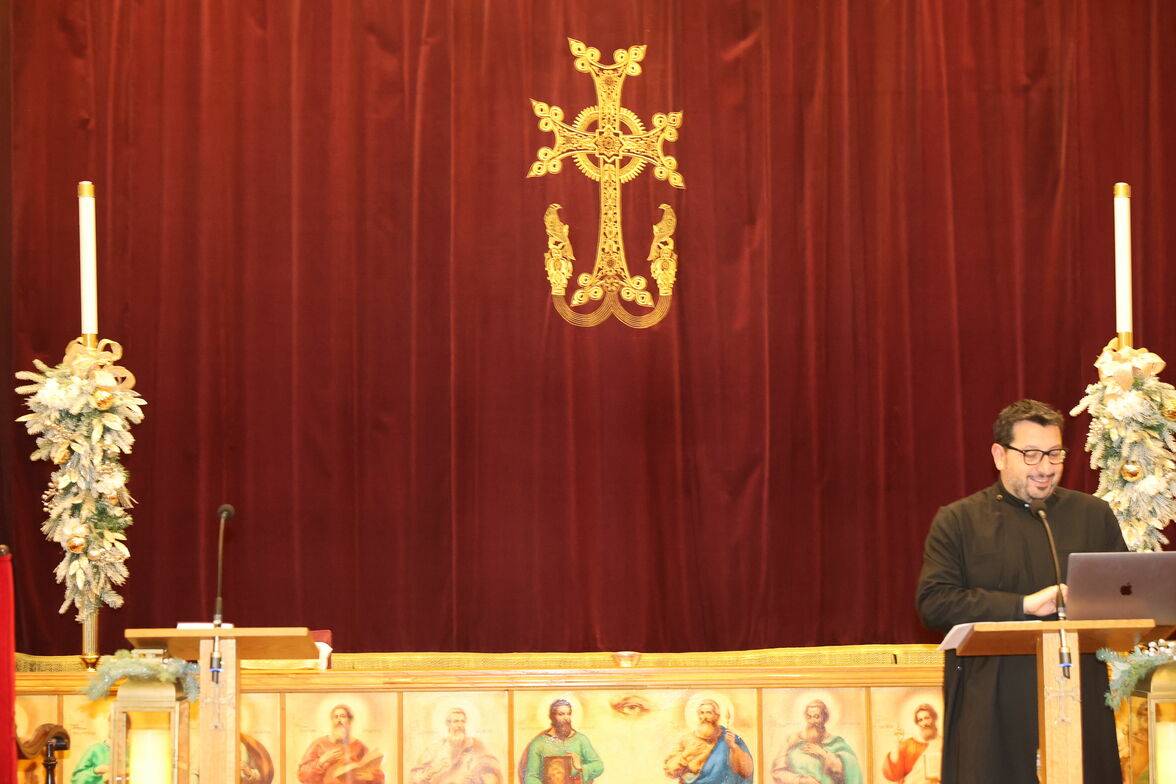
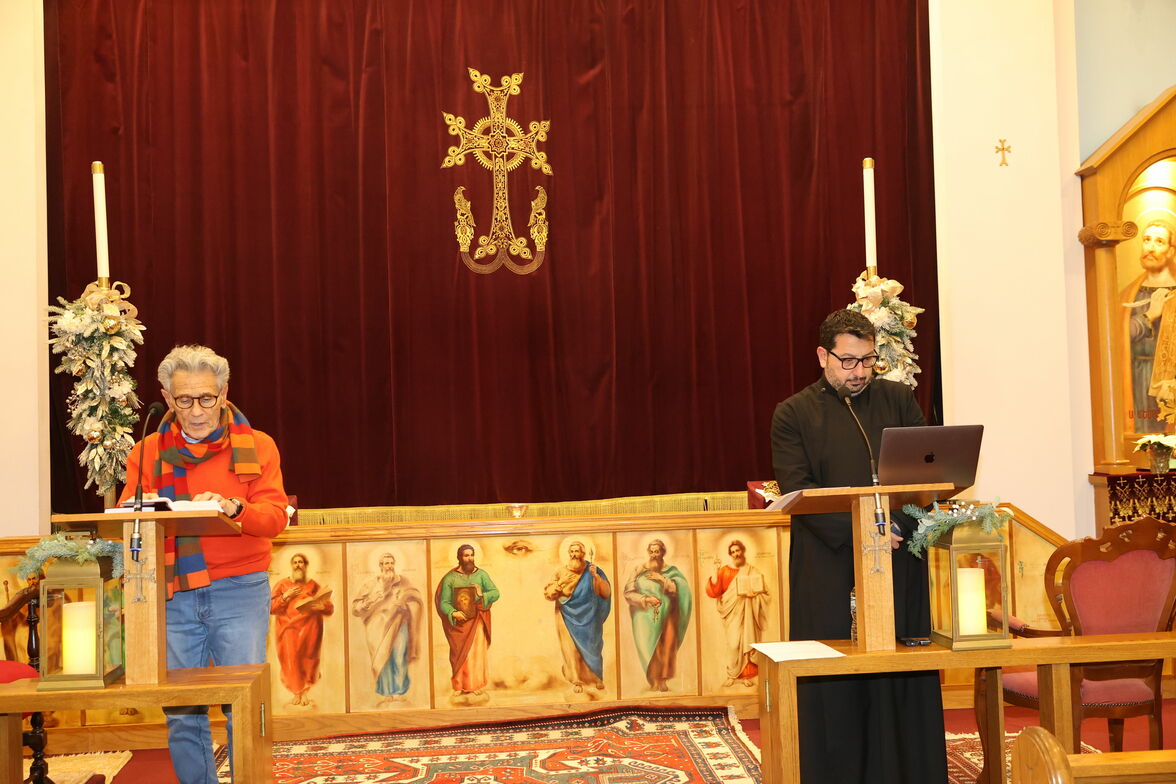
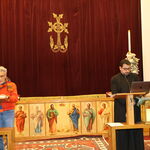
Archpriest Fr. Nareg Terterian explained at the outset that, just as the parish has grown accustomed to its Good Friday retreat, this year the community was invited to do something similar for Christmas: to read the Gospel narratives of the Nativity, receive brief explanations, and then spend time in quiet reflection and prayer. The evening opened with a reading from the Gospel of Luke and a simple invocation of the Holy Spirit to “fill our hearts and fill the sanctuary” as participants reflected on the Word of God in this holy season.
The retreat was structured in six short parts, each built around Scripture. The first meditation focused on Luke 2:1–7 and St. Paul’s words to the Galatians about the “fullness of time,” emphasizing that the birth of Christ is firmly rooted in real history, under Caesar Augustus, in a specific land, under foreign occupation. From there, Fr. Nareg invited parishioners to consider their own “life circumstances” in 2025 and ask where they desire Christ to be born anew in their personal stories and struggles.
In the second part, the group turned to the genealogy of Jesus in Matthew 1. Far from being a dull list of names, it became a doorway into God’s mercy. Fr. Nareg highlighted the presence of women such as Tamar, Rahab, and Ruth, noting that their lives carried complicated, and even scandalous, stories. Yet, Matthew deliberately keeps their names in the line of Christ. God does not erase messy family stories, he stressed; instead, He works through them. Retreat participants were gently invited to reflect on their own “messy” family realities, estranged relatives, divorce, and hidden secrets, and to ask how God might be at work even there. A reflective song played as people prayed quietly on these themes.
The third section focused on Mary and Joseph. Drawing on the Annunciation in Luke and Joseph’s dream in Matthew, Fr. Nareg contrasted Zechariah’s disbelief with Mary’s questioning yet trusting heart. Mary shows that genuine faith still asks honest questions, yet ultimately says, “Let it be according to your word,” even when that yes is costly and risky. Joseph, meanwhile, is portrayed as a righteous man whose justice is softened by mercy: he does not wish to expose Mary to disgrace and, after his dream, obeys promptly and concretely. Though Joseph never speaks a recorded word in the Gospels, his actions protect Mary and the Christ Child, and he becomes a powerful model of quiet courage and responsibility.
In the fourth part, the meditation returned to Bethlehem and the manger. Fr. Nareg explained the cultural setting of small Middle Eastern homes, where family and animals often shared connected spaces, and clarified that “no room in the inn” likely meant no space in the main guest room, not a heartless refusal of hospitality. Even so, the image of the Child placed in a manger, a feeding trough on the ground, remains a striking sign of divine humility. God descends to the lowest place, he said, and is not afraid of the “dirty and ugly parts” of human life; in fact, He chooses to be born right there. Parishioners were encouraged to consider the “overcrowded rooms” of their hearts and the hidden “stable” areas they usually keep closed, asking what might need to be cleared away to make room for Christ this Christmas.
The fifth meditation brought together the shepherds of Luke and the Magi of Matthew. The shepherds, living “nearby” in the fields, symbolize those who are spiritually close and ready; they respond quickly to the angel’s message and become the first evangelists of the newborn Savior. The Magi represent seekers who come from afar, guided by a mysterious star and tested by obstacles such as King Herod. Both groups, though very different, arrive at the same Child and respond with worship. Participants were invited to reflect on their own journey of faith: Are they more like the simple, nearby shepherds, or like the searching Magi who must travel a long road toward truth?
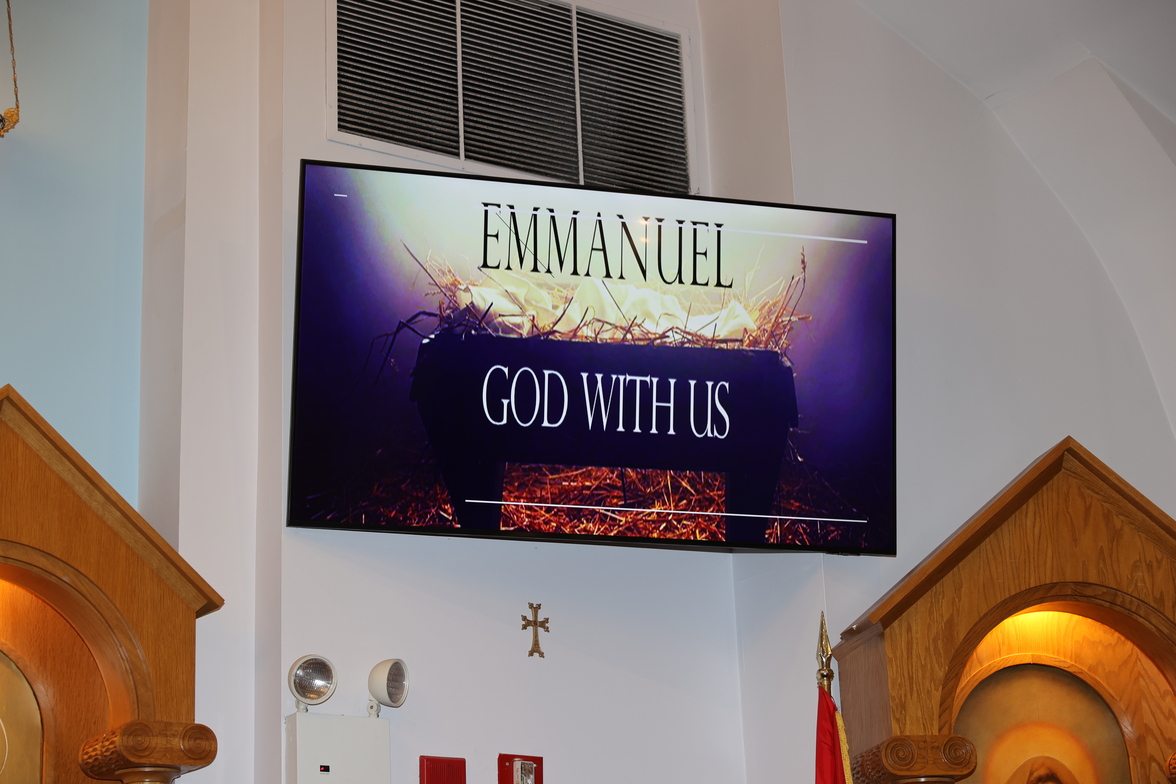
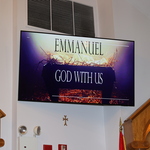
The final section centered on the name “Emmanuel – God with us,” and the mystery of the Word made flesh. Drawing on Matthew 1:22-23 and John 1:14, Fr. Nareg underlined that the Incarnation is not a sentimental year-end story, but God’s decision to share fully in our history, confusion, poverty, joy, and sorrow for our sake. The evening concluded with a reflection on the beloved sharagan “Khorurt Medz” and its line, “O people, bless Him, for He became flesh for our sake,” before participants joined in singing the hymn together.
The retreat closed with prayer and fellowship in Pagumian Hall, where parishioners continued their conversations over cheese, wine, and light refreshments. Grateful for a quiet pause in the midst of the holiday rush, many expressed that the evening helped them see the Christmas story, and their own lives, with renewed depth, hope, and gratitude for the God who is truly “with us.”